MACHU PICCHU FULLDAY BY TRAIN


COMMITTED TO THE ERADICATION OF ESNNA IN TOURISM
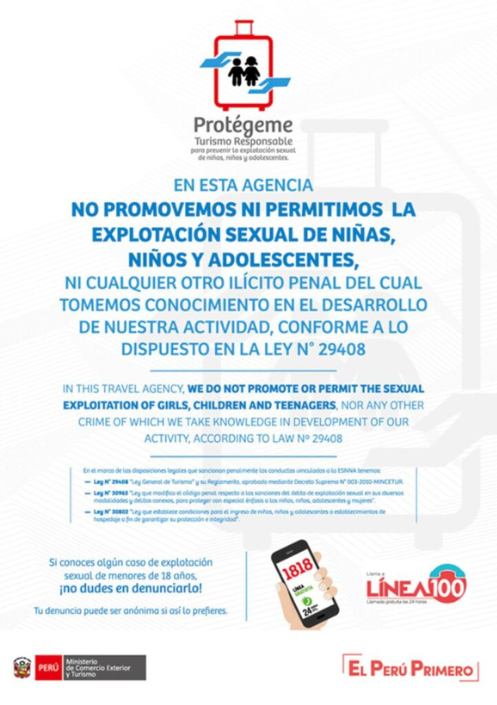
At AMERICAN INCA TRAIL, we firmly uphold the Code of Conduct against the Sexual Exploitation of Children and Adolescents (ESNNA). We believe that delivering exceptional and trustworthy travel experiences goes hand in hand with acting responsibly and promoting sustainable and ethical tourism in every destination we serve.
In compliance with Peruvian Law No. 28251 and the national guidelines led by MINCETUR, we implement clear and responsible policies aimed at preventing, denouncing, and eliminating any form of sexual exploitation of children and adolescents that could be connected to tourism activities. Through these actions, we actively support national efforts to combat this crime and reaffirm our commitment to safe, respectful, and socially responsible tourism.
ESNNA IN PERU: SOCIAL CONTEXT AND TOURISM RESPONSIBILITY
In Peru, the Sexual Exploitation of Children and Adolescents (ESNNA) continues to be a serious social concern. In 2024, authorities reported 1,762 victims of crimes against personal dignity, with 692 cases involving minors (39.3%). In the Loreto region alone, nearly 70% of the 126 identified victims were children and adolescents.
ESNNA is a complex issue that may affect different sectors, including tourism. For this reason, tourism companies, government institutions, local communities, and travelers all share the responsibility of ensuring that tourism development in Peru remains ethical, protective, and beneficial for everyone.
OUR RESPONSIBILITIES AND COMMITMENT TO THE ESNNA CODE OF CONDUCT
- To strictly prohibit and condemn any form of ESNNA within our operations, maintaining zero tolerance toward sexual exploitation involving children or adolescents by tourists, partners, employees, or any individual associated with our company.
- To avoid including, promoting, or facilitating — directly or indirectly — any tourism service, activity, or destination linked to ESNNA, and to refrain from referring travelers to establishments where such activities may occur.
- To provide continuous training and awareness programs for our staff, collaborators, and business partners regarding ESNNA prevention laws, internal regulations, and ethical tourism standards To share educational and informational materials with our clients and stakeholders to promote awareness and prevention of ESNNA.
- To display visible messages and official materials that clearly communicate our firm stance against the sexual exploitation of children and adolescents in travel and tourism. To immediately inform the appropriate authorities of any suspected or confirmed ESNNA-related incident identified during the development of our tourism services.
- To incorporate a mandatory clause in our agreements with tourism providers expressing our shared rejection of ESNNA. The statement included will read: “Tourism promotes a childhood and adolescence free from sexual exploitation.
- Therefore, we do not accept or tolerate any act that encourages or permits the sexual exploitation of children and adolescents.” To fully adhere to all regulations and standards established under the ESNNA Code of Conduct within the tourism sector.